Hermetic Storage and Coffee Quality

Coffee beans being stored
Continue readingDo hermetic bags improve food security?

Do hermetic bags improve food security?
Deteriorating food security is one of the most severe problems faced by the world in recent times. According to a report by the World Bank, approximately 30 percent of the world’s population lacked access to adequate food in 2020 and into 2021. Agriculture-based economies including India are the worst hit by the current state of agriculture.
The primary factor contributing to the deteriorating food security is the lack of storage and transport facilities. Most of the Indian population depends on farming for their livelihood and cannot afford large and expensive storage systems like metal silos.
Owing to the advancements in technology, hermetic storage proves to be the solution to overcome any loss faced due to storage resulting in improved food security.
Hermetic technology is the use of air and moisture-tight components to store goods that are prone to degradation when exposed to air moisture, or other objects. Hermetic technology safeguards products inside a container by maintaining a regulated environment. This means that neither oxygen nor other gases, nor moisture or other particles like dust, can enter or leave. Reinforced hermetic containers and hermetic bags also prevent pest infestation.
Hermetic Bags provides a secure way of storage for the farmers and has various benefits to it.
Longer storage time:
Due to a lack of storage options, farmers are forced to sell their produce at lower prices before the produce goes bad. In some instances, due to improper storage, the product is degraded or infested by pests even before the farmer sells it. This causes a huge loss to the farmers. Hermetic bags create a moisture-controlled environment that prevents any air from entering or leaving the bags. In such a controlled environment, there are no chances of pest infestation or loss of grain quality. Therefore, farmers can sell their goods at desired times and prices as there is no fear and danger of post-harvest loss.
No pesticides required:
Pest infestation is one of the most notorious reasons for post-harvest losses. To avoid these losses farmers use heavy insecticides and pesticides while storage. There are numerous health hazards due to the use of pesticides. They are fatal not only for humans but for animals as well. Without the use of pesticides, Hermetic Bags guarantee the most efficient storage. There are several health risks associated with the usage of pesticides. Farmers can control pests without using pesticides or insecticides through Hermetic Bags. As the hermetic technology blocks moisture inside the bags, incests and pests cannot breed in a moisture-deficient environment. Therefore, to keep insect infestations under control and preserve grain quality, hermetic technology is sufficient.
Cheap and affordable for everyone:
Hermetic bags are an excellent storage option that outweighs traditional grain storage methods. Hermetic bags ensure efficient storage which is cheaper and more affordable when compared it to other storage options. We can store a wide range of dry goods, including all kinds of grains, cereals, lentils, pulses, and seeds in hermetic bags. Flour, herbs, and spices can also be kept in hermetic bags. In recent years, storing coffee and cocoa beans in hermetic bags has gained a lot of popularity. You can also use these bags to store other nuts, like cashew and peanuts.
These bags are available in a range of sizes up to 50 kg and can be used both domestically and commercially. Hermetic bags are the best type of storage, particularly for sustainable agriculture. Additionally, these bags have a lot to offer the environment. These bags are entirely eco-friendly, which means that they can be recycled and that they will eventually decompose. These bags are very reusable and encourage sustainability in agricultural management since you can use one bag for up to three years.
The benefits of hermetic bags outweigh those of conventional grain storage techniques. In India, they are also a successful alternative for reducing grain storage losses and enhancing food security for the same reason. Hermetic Bags retain grain quality without the use of pesticides while also preventing pests and insects. Additionally, they can hold a considerable amount of food grain and are cheap, simple to use, recyclable, and reusable. It is therefore ideal for storage to increase India’s food security.
There are many websites where you may buy hermetic bags. A great option for hermetic bags is Save Grain Bags. These bags are available for purchase from their website at (weblink). The size options for the Hermetic Bags from Save Grain Bags are also quite extensive.Hermetic Bags are the long-term answer to enhancing food security. Hermetic storage bags are available from Save Grain Bags to protect agricultural products from insect infestation and climatic changes, maintaining the grain in its purest form, hence improving food security in India.
Hermetic Storage Technology can save the world

Food security is a key challenge on a planet with a population of over 7 billion people. According to the United Nations, the world’s population will reach 9 billion people by 2050. As a result, there will be more people to feed and fewer available resources. Food security is a worldwide problem that impacts everyone on the planet. According to the UN Food and Agriculture Organization, 815 million people are chronically malnourished, and nearly a billion have micronutrient deficiencies. India currently has the world’s highest population of malnourished people, at roughly 195 million. In India, about 47 million children, or 4 out of 10 youngsters, do not reach their full individual development due to chronic malnutrition or stunting.
Food security refers to the availability of food that satisfies people’s dietary demands and food choices in order to live a healthy and active lifestyle. Food security is a wide concept that can be defined in a variety of ways. It is determined by the number of people who have adequate food to live a healthy and active lifestyle. “Having physical, social, and economic access to sufficient, safe, and nutritious food that meets their dietary needs for a healthy and active lifestyle at all times,” according to the United Nations. It is a measurement of our ability to generate enough food for everyone on the planet. Food security is critical because it ensures that people have access to food and can afford to purchase it. It also ensures that enough food is available for the populace and that it is safe to eat.
The three main components of food security are availability, access, and stability.
Availability:
There is a supply of food to different regions or nations since food consumers outweigh producers in every country. The storage, processing, transportation, packaging, and marketing of food are all part of the food distribution process. The food-chain infrastructure and farm storage technology also impacts the amount of food wasted in the distribution process Poor transportation infrastructure can raise the cost of delivering water and fertilizer, as well as the cost of transporting food to national and international markets. Few people or households around the world are food self-sufficient all of the time.
Access:
Individual and household preferences, as well as food affordability and distribution, are all factors that influence food access. The UN Committee of Economic, Social, and Cultural Rights state that the inability to acquire available food often causes hunger and malnutrition, which is usually due to poverty. Poverty can limit access to food and make a person or family more vulnerable to price fluctuations. whether or not the household has adequate income to purchase food at current prices or enough land and other resources to cultivate its own food determines the food Acess. Households with sufficient resources can survive weather conditions and local food shortages while maintaining access to food.
Stability:
Food stability is the ability to receive food over time. Food insecurity can be periodic, seasonal, or long-term. In transitory food insecurity, food may be unavailable for a short period of time.. Natural catastrophes and drought cause crop failure and reduced food availability at the level of food production. The regular pattern of growing seasons in food production might result in seasonal food shortages.
Hermetic Storage and Food Insecurity in India.
Post-harvest losses waste more than one-third of the food produced in India, contributing to food poverty. Pest infestations and inadequate storage facilities are the primary causes of these losses. Meeting food demand in a country with an ever-increasing population becomes incredibly difficult under such circumstances. Aside from the lack of food, farmers lose a lot of money when their entire crop goes to waste. Reduced post-harvest losses in India is a long-term option for enhancing the food supply. It will also contribute to the conservation of natural resources, the eradication of hunger, and the improvement of farmer livelihoods. While traditional post-harvest procedures have proven ineffectual, hermetic storage technology is gaining popularity due to its potential to prevent post-harvest losses.
How Hermetic Storage can improve food security in India.
The environment is a big worry when keeping grains in India, and Hermetic Bags can help with that. They produce a controlled atmosphere with low humidity and a comfortable temperature. An air-tight technology protects the grains inside these bags, therefore the weather outside does not affect them. Hermetic bags create airtight, self-regulating, and regulated environments due to which the moisture level is still ideal. As a result, when there is a lack of moisture, the grains do not become hard. They’re also free of bug infestations and mold growth caused by excess moisture.
The hermetic bags can be used to store a variety of dry items, such as grains, cereals, lentils, pulses, and other seeds. Flour, herbs, and spices like turmeric and chilli powder can also be preserved in hermetic bags. Furthermore, in recent years, preserving coffee, cocoa beans, and tea in them has become increasingly popular. These bags can also store nuts such as cashews and peanuts. These bags are available in a variety of sizes and can be used for both commercial and home purposes.
Hermetic bags use hermetic technology to produce a controlled environment that prevents air from passing through. As a result, the temperature remains altered, and there are no bug infestations owing to a lack of oxygen.
Save Grain Bags provides hermetic storage bags that protect grain from spoiling. Between the grains and the outside environment, they serve as a moisture and air barrier. As a result, humidity, external climatic conditions, and pest infestation have no effect on your goods while it is stored in them. They are also recyclable, reusable, affordable, simple to use, and capable of storing large volumes of food grain. As a result, it’s ideal for post-harvest storage in India.
How Hermetic Storage Technology Helped Indian Farmers

Over one-third of the food produced in India is wasted due to post-harvest losses. Pest Manifestations and improper storage facilities are the major factors contributing to these losses. In such conditions, meeting food demand in a country with an ever-increasing population becomes extremely challenging. Apart from the shortage of food, farmers face huge financial losses when the entire production goes to waste. A long-term solution for increasing the food supply is to reduce the post-harvest losses in India. It will also aid in reducing pressure on natural resources, eliminating hunger, and improving farmers’ livelihoods. While the traditional post-harvest methods remain ineffective in curbing these losses, hermetic storage technology is growing popular due to its ability to reduce post-harvest losses.
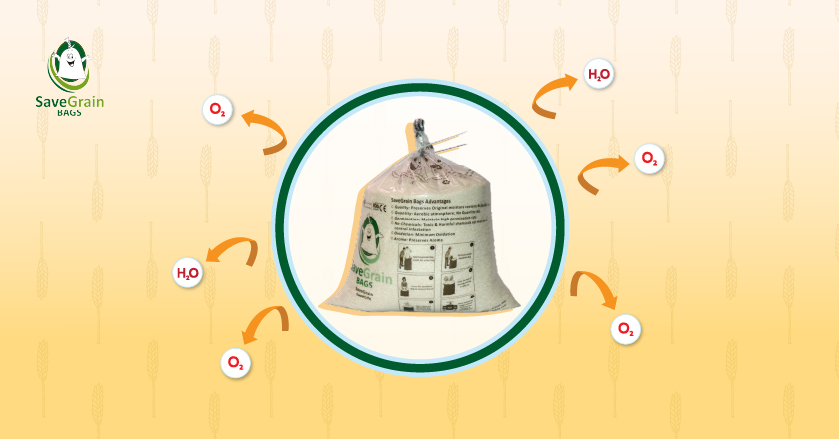
Hermetic bags use hermetic technology to create a regulated atmosphere that does not allow the air to pass through. As a result, the temperature remains modified and due to the lack of oxygen, there are no pest infestations.
How Hermetic Storage technology helped Indian Farmers.
The major concern while storing grains in India is the climate and Hermetic Bags work especially on that. They create a controlled environment with low humidity and a cool temperature. An air-tight technology protects the grains inside these bags, which ensures that the outside weather does not influence them. Hermetic bags create an airtight, self-regulating, and controlled environment. The moisture level remains optimum. As a result, the grains do not get hard as a result of a lack of moisture. They also don’t have pest infestations or mold growth from excessive moisture.
Therefore Hermetic Bags are the best solution when it comes to reducing post-harvest losses in India.
The hermetic bags can store a wide range of dry goods, including grains, cereals, lentils, pulses, and seeds of various kinds. Hermetic bags can also be used to preserve flour, herbs, and spices like turmeric and chili powder. In addition, storing coffee, cocoa beans, and tea in them has grown increasingly popular in recent years. Additionally, you can use these bags to store nuts like cashews and peanuts. These bags come in various sizes and can be used for both commercial as well as domestic use.
Why are Hermetic Bags ideal for storage?
Hermetic Bags are ideal for storage especially when it comes to sustainable agriculture. These bags offer a lot to the environment as well. These bags are completely eco-friendly which means they can be recycled. You can use one bag for up to 3 years so these are highly reusable and promote sustainability in agricultural management. Hermetic Bags not only prevent pests and insects but also maintain the grain quality without the use of pesticides.
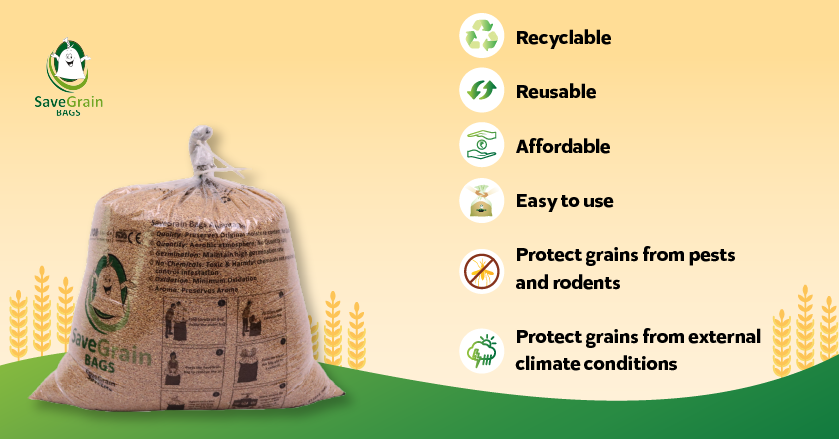
Save Grain Bags offers hermetic storage bags that can prevent grain loss. They act as a moisture and air barrier between the grains and the outside world. As a result, when you store your product in them, humidity, outside climatic conditions, and a pest infestation have no effect on it. Furthermore, they are recyclable, reusable, inexpensive, easy to use, and can store considerable amounts of food grain. As a result, it’s perfect for storage to reduce post-harvest losses in India.
How to end grain loss when storing wheat?

Wheat is one of the most widely grown grains in India. With a production of 107,860 thousand tons of wheat, India is responsible for 14% of the global wheat supply. India is the leading wheat exporter to countries like Bangladesh, Nepal, United Arab Emirates, Indonesia, Pakistan, and Malaysia. Once the wheat is exported, it is stored all over the world. One of the most important issues that wheat storage facilities experience is harvest loss due to insect damage. It occurs when the insects breed and increase over time.
Red Flour Beetle, termites, and brown mites are the most notorious pests that damage wheat during storage. As a result, insect infestations result in:
- Lower grain weight
- Reduced nutritional and economic value
- Low rate of seed germination
- Quantity loss of grains
- Quality deterioration of grains
Humans cannot consume the infested grains as they become inedible.
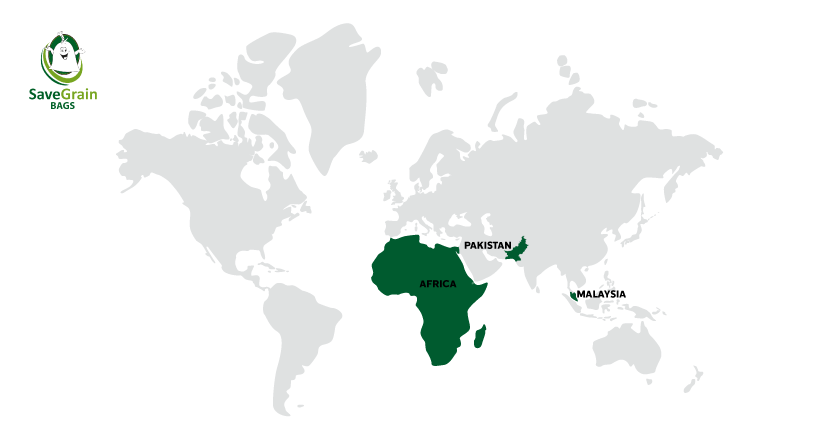
Pakistan, Africa, and Malaysia are some of the countries with the highest post-harvest grain losses.
To combat grain losses, various researches and studies are being carried out. They conclude hermetic bags are effective in controlling grain loss.
Lack of oxygen can reduce the population of Red Flour Beetles:
Red Flour Beetle thrives in damp, oxygen-rich environments. If we control the level of oxygen in the storage facility, we can also control pest infestation. The insects will not be able to multiply in oxygen-deficient surroundings. Therefore, it becomes important to limit the air supply to the storage units.
Hermetic Bags are effective against insect and pest damage. These bags control moisture content by depleting oxygen. As a result, there are no chances of pests, insects, or fungi. As the bags are airtight, the respiration of grains, insects, and molds in the storage will increase CO2 levels. Under such conditions, fungal and insect growths can be inhibited.
Hermetic Bags for increased flour weight:
Hermetic Bags store grains safely in an airtight, self-regulated, and modified atmosphere. These bags also control the moisture content in the grains, which results in increased flour weight and seed germination. As a result, the grain quality will be higher in hermetic bags than the ordinary storage methods.
Reduce insect damage efficiently with SAVE GRAIN BAGS:
Save Grain Bags apply hermetic technology that effectively stores grains in an airtight, self-regulating, and controlled environment. These bags reduce the amount of moisture in the air by removing oxygen. As a result, there are no bugs, insects, or fungi to worry about. Hermetic Bags reduce pest infestation without the use of any harmful pesticides and toxins These bags do not affect the quality of the grain or seed germination. Even the aroma of the grain remains intact. The quality of grains stored in hermetic bags is higher than the grains stored in traditional methods. Moreover, these bags are completely reusable as well as recyclable.
Save Grain Bags are the most efficient and sustainable way to end grain loss when storing wheat.
Silo Storage: Top 4 problems in grain storage silos

Silo storage is a popular grain storage method that has a fair share of problems. Hermetic storage, however, can ensure grain storage without these risks.
Continue readingThe criticality of Maize and its Post Harvest Storage

Maize (or corn) sees the highest production amongst cereals. Overcoming post harvest storage challenges of maize will ensure better food security.
Continue readingEnsuring Food Security Amidst a Pandemic

Food security is a grave challenge and covid-19 has only impacted it further. Hermetic bags are lifesavers in times of unsatisfactory food security.
Continue reading